.jpg)

St. Benedict and the Balance of Prayer, Work, and Rest
In a world that often praises productivity and output, a Christian can easily lose sight of the fact that we were never meant to live life at a frantic pace.


In a world that often praises productivity and output, a Christian can easily lose sight of the fact that we were never meant to live life at a frantic pace.
St. Benedict offered a rule of life that ordered the day around a different rhythm: prayer, work, and rest held together in harmony. His wisdom is surprisingly practical, even for those of us not called life in a monastery.
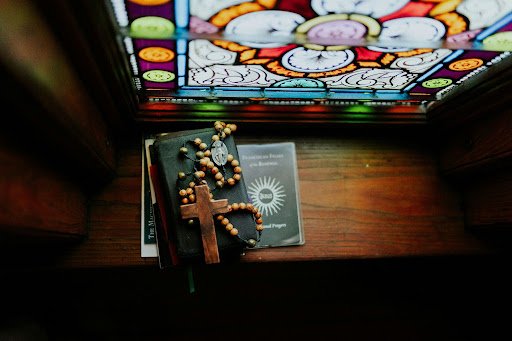
St. Benedict of Nursia (c. 480–547), whose feast day is celebrated this month, is best known for the Rule of St. Benedict, a guide for monastic life that shaped Western Christianity for centuries. At its heart is a simple principle often summarized as ora et labora—pray and work–giving us a vision of the human person ordered toward God in every part of life.
Benedict insists that prayer, work, meals, rest, reading, and the steady hearing of God’s Word are all given their place within the day. Ordering life in this way reminds us of what we believe is most important; it is a way of keeping first things first.
It is one thing to say we love God. It is another to actually stop seven or eight times a day to pray the Psalms, to set aside what we are doing and return to prayer. The day is continually re-centered on God.
We often think of ourselves and our health in separate categories—spiritual, physical, emotional, relational—but in reality those parts of our lives are deeply intertwined. The spiritual life is shaped by the physical, and our relationships inevitably form our inner emotional world. St. Benedict’s wisdom assumes this unity rather than trying to separate it. Work becomes an expression of prayer; everything we do is ordered toward the glory of God.
Benedict is also clear about what disrupts this order. “Idleness is the enemy of the soul,” he writes. But idleness is not the same as true, life-giving rest. Idleness is aimlessness, a drifting away from presence and purpose. Rest or Holy Leisure, on the other hand, is active. As Catholic German philosopher Josef Pieper in his book, Leisure: The Basis of Culture, leisure is “...the opportunity to engage in activities that truly nourish the soul.”
This distinction matters in a particularly modern way. Many of us move quickly from one thing to the next without ever fully inhabiting any of it. Even our rest is often restless—filled with distraction rather than restoration, noise rather than stillness.
What Benedict offers in response is not another demand placed on an already overfull life, but a way of recovering shape within it.
Finding a Benedictine Rhythm in Modern Life
The wisdom of St. Benedict can help shape our ordinary life and daily routine.
1. Begin the day before the noise begins
Before checking messages, news, or even the mental list of what needs to get done, begin with prayer. This does not need to be long. Praying with Scripture or reciting a Psalm, or even morning offering is enough to set the tone before everything starts pulling for attention.
2. Let prayer mark the day in small, steady ways
Instead of trying to “fit prayer in,” think in terms of returning to it. A short midday pause, a prayer before meals, a quick turning of the heart back to God while folding laundry or driving in the car; these small returns keep the day from becoming purely reactive.
3. Give ordinary work its proper weight
Cooking dinner, answering emails, cleaning the kitchen, homeschooling, commuting—none of it is spiritually neutral. When offered with intention, these are not interruptions to a spiritual life but part of it. Even a simple “Lord, I offer this” quietly changes the way we approach what is in front of us.
Pietra Fitness classes offer one way to intentionally practice this today. Instead of separating exercise as “work for the body” and prayer as “work for the soul,” our classes reflect a more Benedictine rhythm: the whole person moving, praying, and offering effort as one unified act.
4. Protect real rest, not just distraction
There is a difference between rest and numbing out. Rest restores attention; distraction scatters it. Real rest might look like an early bedtime, reading something good, keeping Sundays free from unnecessary work, or simply being present with your family without a screen in hand. It does not always feel productive, but it is necessary.
5. Build a rhythm you can actually keep
Consistency matters more than intensity. Small habits you can live with on ordinary days will form you far more deeply than an ideal schedule you can only manage occasionally. The Benedictine life is not built on extremes, but on faithful repetition.
At the center of St. Benedict’s vision is a steady rhythm where prayer, work, and rest belong together rather than competing with one another.
Incorporating this rhythm into our own days then invites us back into a more integrated way of life—one where our attention can be gathered, our work can be offered with purpose, and our rest can actually restore us.